

CubeMarch · In the browser
Describe an object.
It appears in the scene.
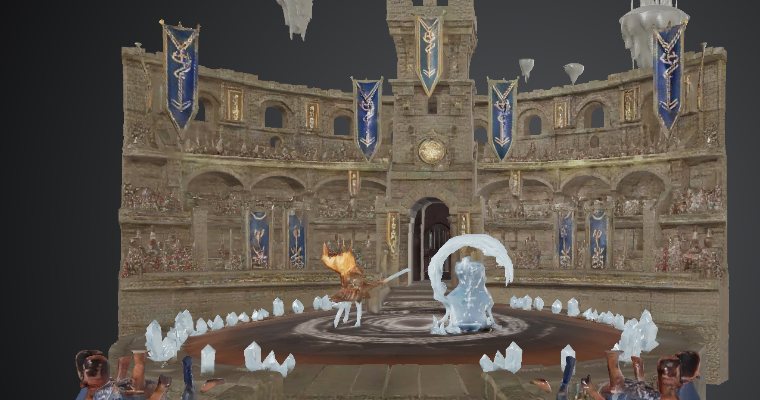
A platform for building three-dimensional environments and running guided sessions inside them. Generate a model from a written description, arrange what comes back into a habitat, and hand someone a link to walk into it.
It is delivered as a browser build. No install, no store, no headset required to be in the room.
- Runs in a browser
- Text to 3D
- Design-partner beta
The hard part
Generating the model is the easy half.
A text-to-3D endpoint is a solved problem you can rent. What is actually difficult is everything that has to be true around it before a generated object is of any use to someone running a session with another person in the room.
Generation is a queue, not a function
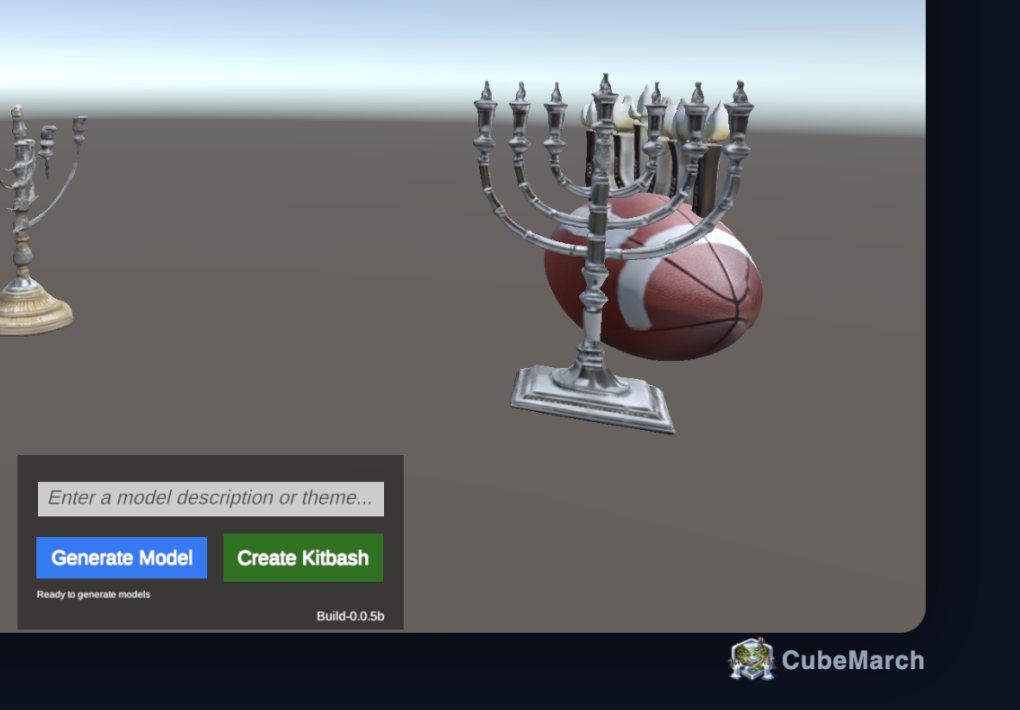
A model is GPU work on separate hardware, measured in seconds rather than milliseconds. The editor hands the job off and keeps running, because a scene that freezes while someone waits for a candlestick is a scene nobody can hold a session in.
A model is not a scene
What comes back is one object. A habitat is the arrangement — what sits where, how it is lit, what the room is supposed to feel like. Kitbashing composes several generated pieces into a single object, which is the step between having assets and having somewhere to be.
It has to open where the other person is
The build runs in a browser. Someone who has been sent a link should not also need an install, a store account and a headset before they can be in the room. The hardest requirement to meet is the one that happens on somebody else's machine.
A room needs an owner
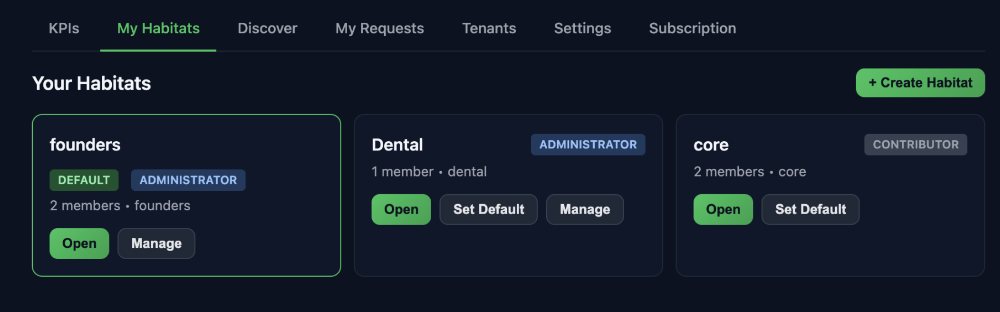
Habitats carry members and roles — administrator, contributor, member — inside a tenant that owns the subscription. Who may change the room is a different question from who may enter it, and both are answered before anyone is in it.
Generating
A prompt box, and the scene behind it.
The generator sits in the environment rather than beside it. You type a description, the job goes out, and the result arrives in the scene you are already standing in — at the scale and in the place you were looking.
Generate Model returns a single object. Create Kitbash composes several into one, which is how you get something specific rather than something generic.
What comes back
The generator is not tuned to one subject.
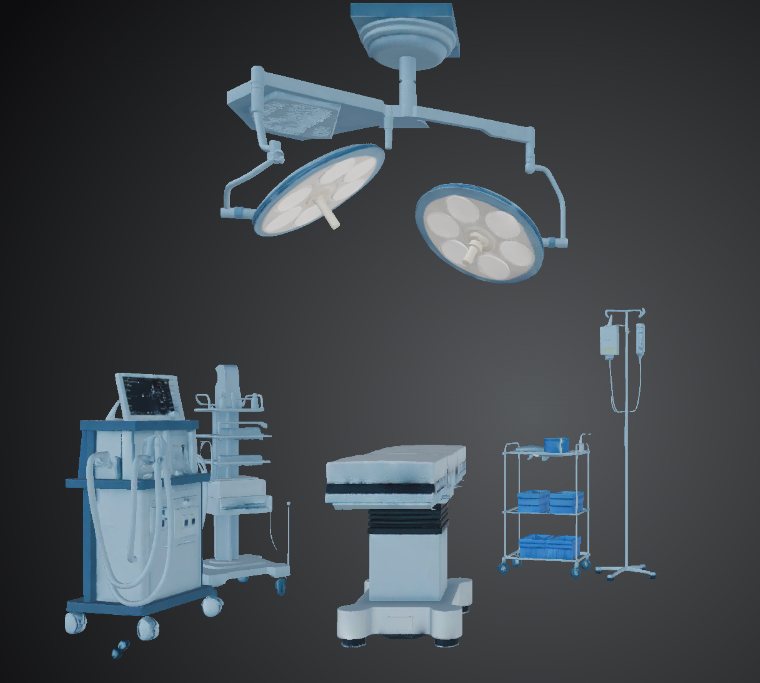
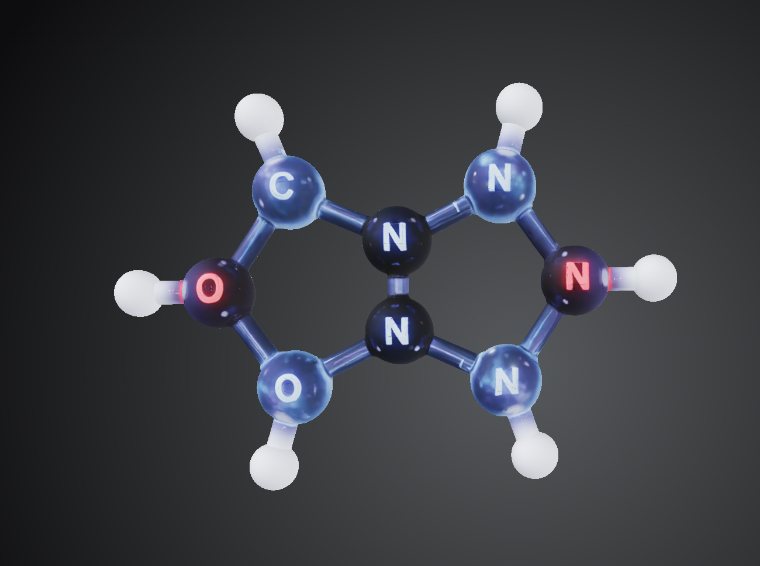
The same prompt box produces clinical equipment, diagrams and scenery, because none of them are special cases — they are all geometry and a material. Which of them matters is a question about the session, not about the software.
The platform around it
Habitats, and who is in them.
A generated object is worth very little on its own. The rest of the product is the part that makes one durable, shareable and attributable to somebody.
| Habitat builder | Real-time collaborative environment creation. Place objects, set lighting, configure the mood of a scene, and share it. |
|---|---|
| Model generation | Text-to-3D object generation from inside the scene, so a thing that is missing can be added during a session rather than modelled before one. |
| Characters | Configurable non-player characters can be placed in a scene, with roles and interaction modes, for role-play and rehearsal work. |
| Library | Pre-built environment templates, so the starting point is not an empty grey plane every time. |
| Accounts and tenants | Multi-tenant workspaces with per-habitat membership, roles, access control and a subscription that belongs to the tenant rather than to a person. |
| Discovery | Habitats may be published for others to find and ask to join, or kept to their tenant. |
Stated plainly
Where it actually is.
CubeMarch is the youngest of the three products here and the only one you cannot simply go and use. It is worth being exact about what that means.
| Not open | Entry is by application to a design-partner cohort, which is deliberately small. There is no self-service sign-up and no public download, and this page does not pretend otherwise. |
|---|---|
| Shipped is a shorter list | The capabilities above are the ones already built. Rigging and animation, live multi-person sessions, synthesised character voices and session notes are all published roadmap items rather than things you can use today. The product's own roadmap is the authority on which is which. |
| Not a clinical claim | This page describes what the software does. Nothing here is a statement about treatment, outcomes or regulatory status, and nothing here should be read as one. |
| Not the same shape as the other two | VRecord and QuestJam are two ends of one chain and share a protocol. CubeMarch shares neither. It is here because it is the same company solving the same problem from the other direction — building the world instead of filming one. |
CubeMarch has its own site. It is the product's own account of itself, it is kept current by the people building it, and it is where an application to the design-partner programme actually goes.